
Significance
Immigration from Gabon has generally reflected French colonial influence, educational opportunities, professional employment, economic development, regional mobility, political transitions, family reunification, and international business connections.
Migration from Gabon has historically remained relatively limited compared with many African countries because of its small population, higher income levels driven by the oil industry, and political stability for much of the post-independence period. Most Gabonese migrants relocated within Africa or to France for education, employment, trade, government service, or family reasons. Smaller numbers travelled to the United States as students, healthcare professionals, academics, diplomats, businesspeople, skilled workers, and entrepreneurs. In recent decades, changing economic conditions, declining oil revenues, employment opportunities abroad, and family sponsorship have contributed to modest migration to the United States, where Gabonese immigrants have established communities while maintaining strong cultural, linguistic, and family ties with their homeland.
Gabonese Migration Before Independence
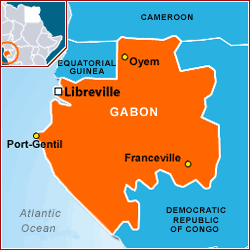
Before independence, Gabon formed part of French Equatorial Africa, and migration was shaped by French colonial administration, commercial activity, missionary education, forestry, mining, and public service. Residents frequently travelled to neighbouring territories, including Cameroon, the Republic of the Congo, Equatorial Guinea, and other parts of French Central Africa, as traders, labourers, government employees, soldiers, students, and members of extended families. Direct migration to the United States remained uncommon because educational, political, and economic connections were centred primarily on France. Gabon proclaimed independence on August 17, 1960, and the United States recognised the new nation the same day before establishing diplomatic relations shortly thereafter.
Late-Twentieth- and Early-Twenty-First-Century Immigration
Migration patterns gradually evolved after independence as Gabonese citizens increasingly pursued higher education, specialised careers, and international business opportunities. Students, engineers, healthcare workers, academics, diplomats, energy-sector professionals, and entrepreneurs travelled to France, the United States, Canada, and other countries for university studies, professional employment, research, or family reunification. More recent economic challenges, fluctuating oil revenues, and periods of political transition have encouraged some Gabonese citizens to seek opportunities abroad while maintaining close connections with their homeland. In the United States, Gabonese immigrants often rely on family networks, churches, cultural organisations, alumni associations, and professional communities for support with housing, employment, education, and social integration while preserving the French language, local traditions, music, cuisine, religious practices, and relationships with relatives in Gabon.