Sign In




 Facebook
 X-Twitter
 Instagram
 Linkedin
 Youtube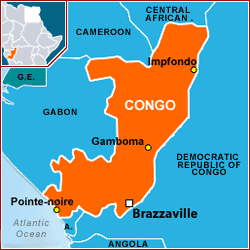

Significance
Congolese migration from the Republic of the Congo has generally reflected French colonial rule, regional labour movement, political instability, civil conflict, education, professional employment, asylum, and family reunification.
Migration from the Republic of the Congo—also known as Congo-Brazzaville—has historically focused on France and neighbouring African countries rather than the United States. Congolese residents commonly travelled to Gabon, the Democratic Republic of the Congo, Cameroon, South Africa, and France for employment, commerce, education, healthcare, and family connections. Overseas migration increased after independence as political unrest, economic difficulties, and the civil conflicts of the 1990s displaced communities. Direct migration to the United States remained comparatively small and primarily involved students, diplomats, academics, healthcare professionals, skilled workers, asylum seekers, and relatives joining established family members. Congolese communities abroad maintained close connections through remittances, cultural organisations, churches, and family networks.
Congolese Migration Before Independence
Before independence, the territory formed part of French Equatorial Africa, and migration was influenced by colonial administration, forced labour, military recruitment, regional commerce, education, and transportation projects. Residents travelled throughout Central Africa as agricultural labourers, traders, soldiers, domestic workers, sailors, students, and government employees. Political, educational, and commercial relationships operated mainly through France and other French-administered African territories, making direct migration to the United States uncommon. During World War II, Brazzaville became the symbolic capital of Free France between 1940 and 1943, strengthening the territory’s administrative importance within the French Empire. The Republic of the Congo achieved independence from France on August 15, 1960, and the United States recognised the new country that same day.
Late-Twentieth- and Early-Twenty-First-Century Migration
Migration increased after independence as political struggles, economic problems, military rule, and armed conflicts disrupted employment and community life. Fighting during the 1990s caused substantial internal displacement and forced many Congolese to seek safety in the Democratic Republic of the Congo, Gabon, France, and other destinations. Students, doctors, academics, businesspeople, diplomats, religious workers, and families also travelled to the United States for university education, professional employment, asylum, and family reunification. At the same time, the Republic of the Congo became a destination for refugees from neighbouring countries, particularly the Central African Republic, the Democratic Republic of the Congo, and Rwanda. Congolese organisations abroad helped migrants preserve French, Lingala, Kituba, food, music, religious traditions, and family relationships while supporting relatives and community projects at home.