Sign In




 Facebook
 X-Twitter
 Instagram
 Linkedin
 Youtube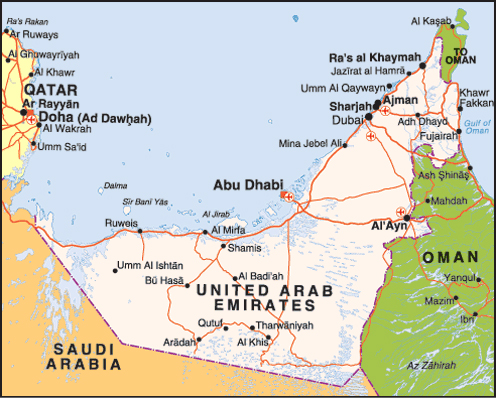

Significance
Emirati immigration to the United States has generally reflected overseas education, diplomatic relations, professional employment, business opportunities, healthcare, family connections, and the international development of the United Arab Emirates.
Migration from the United Arab Emirates to the United States has remained comparatively limited because of the country’s small citizen population and the employment opportunities created by its oil, trade, aviation, finance, construction, and service industries. Early arrivals mainly included students, diplomats, merchants, government officials, businesspeople, and professionals seeking education or specialised training. After the UAE gained independence in 1971, stronger diplomatic, commercial, and educational relations encouraged additional travel and settlement. Emiratis reaching the United States commonly studied at universities, worked in international business or government, received medical care, or joined family members. At the same time, the UAE developed into one of the world’s leading destinations for foreign workers.
Emirati Migration Before Federation
Before the UAE was established, the region consisted of separate sheikhdoms commonly known as the Trucial States, which maintained treaty relationships with Britain. Migration was shaped by pearl diving, fishing, maritime commerce, date cultivation, seasonal labour, and trade across the Persian Gulf and Indian Ocean. Residents travelled to Bahrain, Oman, Iran, India, East Africa, and other regional destinations as sailors, merchants, pearl divers, religious scholars, and workers. Direct settlement in the United States was uncommon because educational, political, and commercial relationships were concentrated within the Gulf, South Asia, and Britain. The development of petroleum resources later transformed the economy and attracted foreign specialists, technicians, administrators, and labourers, beginning the region’s transition from a source of limited regional movement into a major international labour destination.
Late-Twentieth- and Early-Twenty-First-Century Migration
The United Arab Emirates was established on December 2, 1971, and the United States recognised the new federation the following day. Emirati migration abroad subsequently expanded through government scholarships, university education, diplomatic assignments, military training, international business, professional employment, healthcare, and family reunification. Students and professionals travelled to the United States, Britain, Canada, Australia, and other countries, although many returned after completing their education or assignments. Meanwhile, rapid economic development made the UAE a major destination for migrant workers from South Asia, Southeast Asia, the Middle East, Africa, Europe, and North America. Foreign workers became the large majority of the resident population and supported construction, domestic work, hospitality, transportation, healthcare, technology, finance, retail, and other industries.