Sign In




 Facebook
 X-Twitter
 Instagram
 Linkedin
 Youtube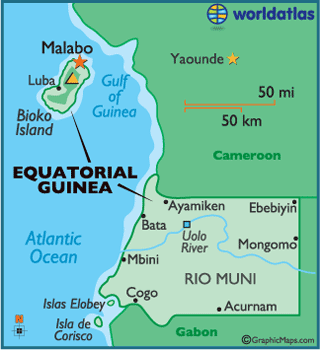

Significance
Equatoguinean migration has generally reflected Spanish colonial rule, political repression, economic hardship, education, professional opportunities, regional movement, asylum, and family reunification.
Migration from Equatorial Guinea has historically focused on Spain and neighbouring African countries rather than the United States. Colonial language, religion, education, and administrative connections made Spain an important destination, while Gabon and Cameroon attracted workers, traders, students, and families. Emigration increased after independence as political repression, poverty, and limited opportunities forced many residents abroad. Smaller numbers later moved to the United States through university education, diplomatic service, professional employment, asylum, or family sponsorship. At the same time, the growth of the oil and gas economy attracted foreign managers, technicians, construction workers, and labourers into Equatorial Guinea, making the country both a source and destination of international migration.
Equatoguinean Migration Before Independence
Before independence, the territory was known as Spanish Guinea and consisted of the island and mainland regions that later formed Equatorial Guinea. Migration was influenced by plantation agriculture, maritime commerce, colonial administration, missionary education, military service, and labour demand. Residents travelled to Spain, Cameroon, Gabon, Nigeria, São Tomé and Príncipe, and other nearby territories as sailors, plantation workers, traders, students, domestic employees, and government workers. Equatoguinean settlement in Spain can be traced to at least the 1940s, although direct migration to the United States remained uncommon because most political, educational, and commercial relationships operated through Spain. These colonial connections created the language, family, and institutional networks that later supported larger migration after independence.
Late-Twentieth- and Early-Twenty-First-Century Migration
Equatorial Guinea gained independence from Spain on October 12, 1968, and established diplomatic relations with the United States later that year. The repressive government of Francisco Macías Nguema caused widespread fear, economic collapse, and political exile, leading many citizens to seek safety in Spain, Gabon, Cameroon, Nigeria, and other countries. Migration continued after Macías was removed in 1979, particularly for education, employment, family reunification, and political protection. From the 1990s, oil development attracted substantial foreign investment and overseas workers, while many Equatoguineans still migrated because national wealth did not create equal social and professional opportunities. Communities abroad preserved Spanish, Fang, Bubi, Annobonese, food, music, religious traditions, and close relationships with relatives at home.