Sign In




 Facebook
 X-Twitter
 Instagram
 Linkedin
 Youtube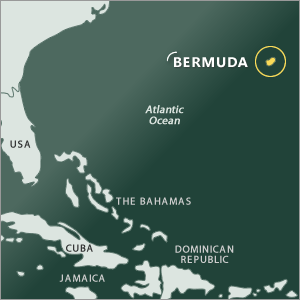

Significance
Bermudian migration has generally reflected British colonial settlement, maritime employment, limited land and job opportunities, family connections, education, military service, tourism, international business, and the search for a lower cost of living.
Migration connected with Bermuda began after permanent British settlement in the early seventeenth century. English settlers, enslaved Africans, Indigenous captives, sailors, soldiers, merchants, and workers from the Caribbean contributed to the island’s early population. After slavery ended in 1834, workers arrived from the West Indies, while Portuguese families from Madeira and the Azores began settling during the nineteenth century. Bermudians also moved abroad—especially to the United States, Canada, and the United Kingdom—for maritime work, military service, education, employment, and family reunification. Modern immigration has brought professionals and workers into tourism, construction, healthcare, finance, insurance, and other services.
Bermudian Migration Before Modern Economic Development
Before Bermuda developed its modern tourism and international-business economy, migration was influenced by its small land area, maritime location, population growth, and dependence on shipping, fishing, farming, shipbuilding, and trade. Many Bermudians worked at sea or settled in North American and Caribbean colonies in search of land and employment. Enslaved Africans and other captive or indentured people were transported to Bermuda during the colonial period, while free workers from the Caribbean arrived after emancipation. In 1849, the first organised group of Portuguese immigrants from Madeira reached Bermuda, and later arrivals became important in farming and other industries. Migrants created churches, neighbourhoods, businesses, and family networks while contributing to Bermuda’s African, European, Portuguese, Caribbean, and Atlantic cultural heritage.
Twentieth-Century Migration
Bermudian migration changed during the twentieth century as tourism, military activity, transportation, construction, and international business expanded. Residents increasingly travelled to the United Kingdom, Canada, and the United States for university education, professional training, military service, healthcare, employment, and family reunification. At the same time, Bermuda attracted foreign workers from Britain, Canada, the United States, Portugal, the Caribbean, and other regions. The 2016 Census recorded more than 19,000 foreign-born residents, representing roughly 30 percent of the population. Foreign workers generally require work permits, and immigration policy seeks to support economic growth while protecting employment opportunities for Bermudians. More recently, high living costs, limited job growth, and housing affordability have encouraged some Bermudians to seek opportunities overseas.