Sign In




 Facebook
 X-Twitter
 Instagram
 Linkedin
 Youtube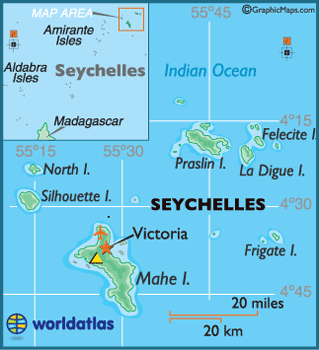

Significance
Seychellois migration has generally reflected French and British colonial rule, the islands’ small labour market, overseas education, professional opportunities, family reunification, political change, and established connections across the Indian Ocean and Europe.
Migration from Seychelles has historically been directed toward the United Kingdom, France, Australia, Canada, South Africa, Mauritius, and other international destinations, while comparatively small communities developed in the United States. Early migrants included sailors, students, teachers, nurses, government employees, merchants, tourism workers, and professionals seeking education or specialised employment overseas. The country’s limited population and employment market encouraged some skilled residents to build careers abroad, although return migration also remained important. Seychellois communities preserve Seychellois Creole, English, French, religious traditions, Creole cuisine, music, dance, and close family relationships. Seychelles is simultaneously a country of emigration, immigration, and internal migration.
Seychellois Migration Before Independence
Permanent settlement in Seychelles began under French colonial rule during the eighteenth century, and the islands later came under British control. The population developed through the movement of Europeans, enslaved Africans, liberated Africans, and people from India, China, Madagascar, Mauritius, and other Indian Ocean territories. Residents worked in agriculture, fishing, maritime trade, government service, coconut production, cinnamon cultivation, and other island industries. Movement abroad commonly involved travel to Mauritius, East Africa, India, Britain, and neighbouring islands for employment, education, trade, or administrative service. Direct migration to the United States remained uncommon because the islands’ strongest political and economic connections were with Britain, France, Mauritius, and the wider Indian Ocean region. Seychelles remained under British sovereignty until June 29, 1976.
Late-Twentieth- and Early-Twenty-First-Century Migration
Seychelles became independent on June 29, 1976, and the United States recognised the new country that same day. During the following decades, migration expanded through university education, healthcare employment, tourism, international business, government service, skilled work, and family reunification. Seychellois migrants reaching the United States commonly included students, diplomats, academics, professionals, businesspeople, and relatives joining established families. At the same time, the growth of tourism, fisheries, construction, and service industries attracted foreign workers to Seychelles, making immigration increasingly important to the national economy. The government later introduced a national diaspora policy to strengthen cultural, professional, and economic relationships with Seychellois communities living overseas.