Sign In




 Facebook
 X-Twitter
 Instagram
 Linkedin
 Youtube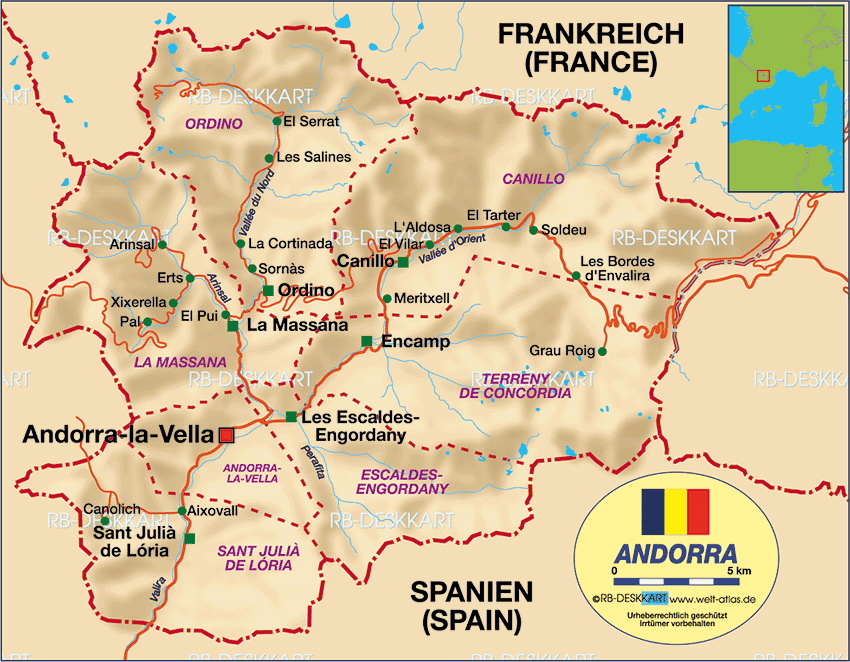
More Information
More Information
Street Soccer in Andorra
Street soccer is a popular recreational activity in Andorra, where children and teenagers often play informal football matches in town squares, school playgrounds, parks, and open community areas. The country's compact towns and close-knit communities make it easy for friends and neighbours to gather for friendly games throughout the year.
These small-sided matches help players improve their ball control, passing accuracy, movement, and teamwork. Playing in limited spaces also encourages quick thinking and creative play, allowing participants to sharpen their technical skills in a fun environment.
Street soccer offers an easy and accessible way for people to enjoy football without the need for large pitches or professional facilities. It promotes an active lifestyle, builds friendships, and strengthens community involvement through sport.
Street Soccer Culture in Andorra
Although Andorra is a small country, football is widely enjoyed by people of all ages. Street soccer is often played informally by friends, families, and school groups, creating an inclusive atmosphere where everyone has the opportunity to take part.
Skills Developed Through Street Soccer
Street soccer helps players develop close ball control, dribbling, accurate passing, agility, balance, and quick decision-making. The fast-paced nature of the game also encourages communication and confidence on the ball.
Street Soccer and Community Development
Street soccer brings local communities together by encouraging participation, teamwork, and healthy competition. It also provides young players with a strong foundation before joining school teams, local football clubs, or organised youth football programmes.
The Andorra in the DMV Metro

- No Local Embassy: Unlike most nations, Andorra does not maintain a physical embassy building in Washington, D.C..
- New York Delegation: The country's diplomatic relations with the United States are managed through the Andorran Permanent Mission to the United Nations in New York City. The Permanent Representative to the UN simultaneously serves as the official Ambassador to the United States.
- Consular Services: Day-to-day U.S. relations are handled in reverse by the U.S. Consul General in Barcelona, Spain.
- Catalan Speakers: The official language of Andorra is Catalan. Local Andorrans look to regional cultural hubs like the Casal Català de Washington DC to celebrate holidays, practice their language, and network.
- Spanish & French Communities: Because Spanish and French are widely spoken in Andorra, expatriates also naturally integrate into the much larger Spanish and French expat communities across D.C. and suburban Maryland.
Significance
Migration in Andorra has generally reflected limited agricultural resources, employment opportunities in neighbouring countries, economic modernisation, tourism, construction, and the country’s close relationship with Spain and France.
Andorran migration historically involved residents leaving the mountain valleys to find employment in nearby regions of Spain and France. This outward movement was especially noticeable during the late nineteenth and early twentieth centuries, when agriculture, livestock farming, forestry, and small-scale trade provided limited economic opportunities. From the mid-twentieth century, Andorra’s expanding tourism, retail, construction, banking, and service industries transformed it from a country of emigration into an important destination for foreign workers. Immigrants arrived mainly from Spain, Portugal, and France, while later communities came from other European and non-European countries. Migration contributed significantly to Andorra’s population growth, cultural diversity, workforce, urban development, and modern economy.
Andorran Migration Before Economic Modernisation
Before the twentieth century, movement in and around Andorra was shaped by its mountainous geography, small settlements, seasonal agriculture, livestock farming, mining, forestry, and trade across the Pyrenees. Residents frequently travelled between Andorra, Catalonia, and southern France for work, commerce, marriage, and family responsibilities. Limited farmland, difficult winters, population pressure, and restricted employment encouraged some Andorrans to settle temporarily or permanently outside the country. During the late nineteenth century and the opening decades of the twentieth century, economic conditions produced a noticeable flow of emigrants toward Spain and France. Despite this movement, Andorran communities preserved close connections with their home parishes, traditional institutions, Catalan language, religious customs, and family property in the valleys.
Twentieth-Century Immigration
Andorra experienced a major demographic and economic transformation during the twentieth century, particularly from the 1950s onward. Improvements in roads, tourism, commerce, construction, public services, and financial activity created employment opportunities that attracted foreign workers. The country rapidly changed from a society that traditionally sent emigrants abroad into one of Europe’s most immigration-dependent societies. Spanish migrants formed the largest early group, followed by substantial Portuguese and French communities and residents from many other national backgrounds. Foreign workers contributed to hotels, restaurants, shops, construction projects, transportation, healthcare, and other services supporting Andorra’s expanding economy. Immigration also increased linguistic and cultural diversity, making Spanish, Portuguese, and French widely spoken alongside Catalan, the country’s official language.